
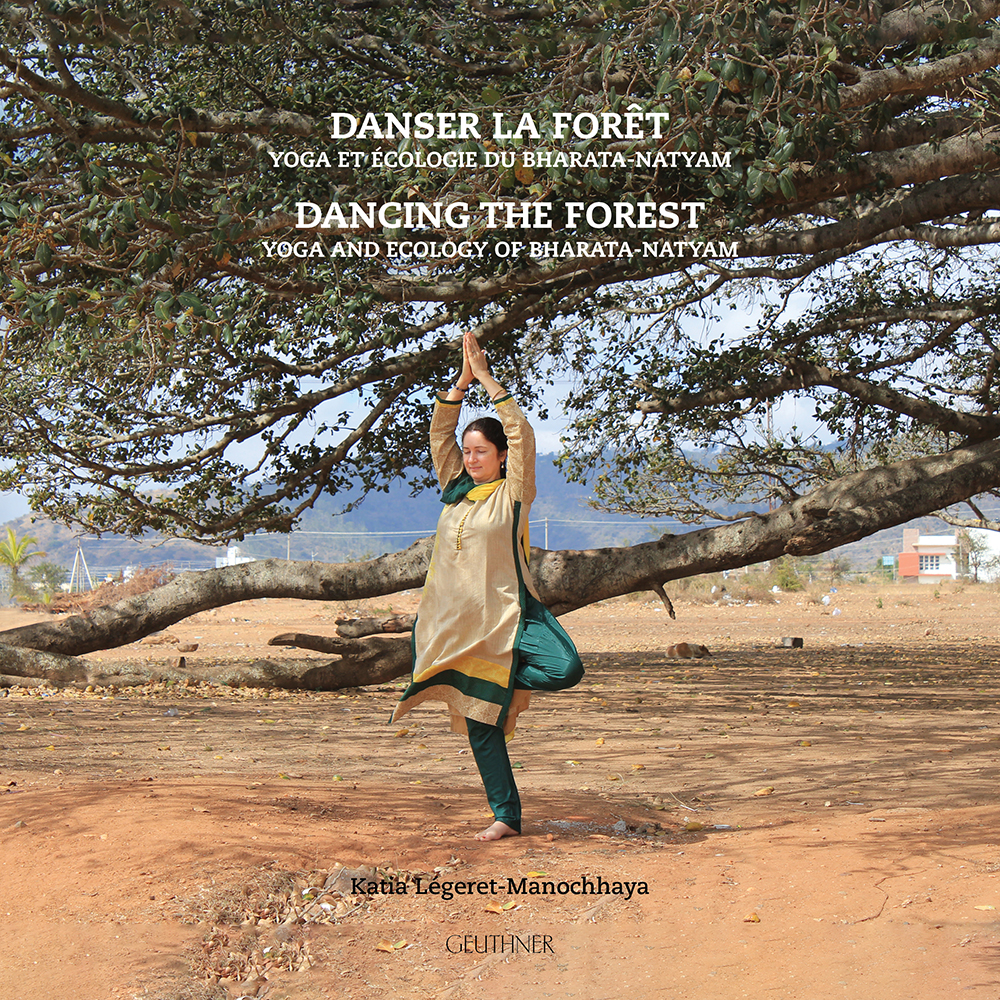
DANSER LA FORÊT Yoga et écologie du bharata-natyam
DANCING THE FOREST Yoga and ecology of bharata-natyamAuteur(s) : LÉGERET-MANOCHHAYA Katia
Parution : 2023
Ce livre est disponible
En savoir plus...
ISBN 10 : 2705341060
ISBN 13 : 9782705341060
Pages : 156
Format (mm) : 210x210
À la fois yoga, art martial, théâtre, danse, poésie et musique, le bharata-natyam puise sa sagesse en Inde dans l’observation de la nature et de ses mouvements, en particulier ceux des arbres. L’Abhinaya-darpaṇa, un texte antérieur au VIe siècle, a élaboré une gestuelle des arbres exceptionnelle, mais très rarement traduite et pratiquée. Katia Légeret-Manochhaya vous invite à la découvrir. Elle y fait fructifier la transmission du maître de bharata-natyam K. Muralidhar Rao qu’elle a reçue à Mysore de 1985 à 2014.
Dans son enseignement oral qui accompagne ce livre, il s’agit de se ressourcer avec les arbres qui nous entourent, à l’intérieur et à l’extérieur de soi, par la méditation, la respiration et le mouvement. La gestuelle des arbres est une énergétique puissante qui harmonise en nous-mêmes rythmes, souffle et sérénité.
Nos enseignements artistiques sont proposés sur le site www.creons-au-musee.com
Combining yoga, martial art, theatre, dance, poetry and music, bharata-natyam draws its wisdom from the observation of nature and its movements, in particular those of trees. The Abhinaya-darpaṇa, a text that dates from before the 6th century, codified an exceptional gestural language of trees, but it is very rarely translated and practiced. Katia Légeret-Manochhaya invites you to discover it. In this way she passes on the teachings of bharata-natyam master Muralidhar Rao which she received at Mysore from 1985 to 2014.
Her oral teachings, which accompany this book, are concerned with nourishing ourselves with the trees that surround us, inside and outside ourselves, through meditation, breathing and movement. The gestural language of trees is a powerful energy that harmonises our rhythms, breath and serenity.
Our artistic teachings are available on the site www.creons-au-musee.com
Katia Légeret est artiste de bharata-natyam (théâtre dansé de l’Inde) chercheuse et professeure des universités en philosophie de l’art. Elle a publié de nombreux ouvrages sur les arts de l’Inde, sur la médiation culturelle au musée et sur les liens entre art et écologie.
Katia Légeret is a bharata-natyam artist (dance theatre of India), university professor and researcher of philosophy of art. She has published numerous works on the arts of India, cultural mediation in museums and the links between art and ecology.
Mots-clés : arts, Inde, musique, poésie, danse, théâtre, yoga, bharata-natyam, art martial
Nos lecteurs ont aussi aimé
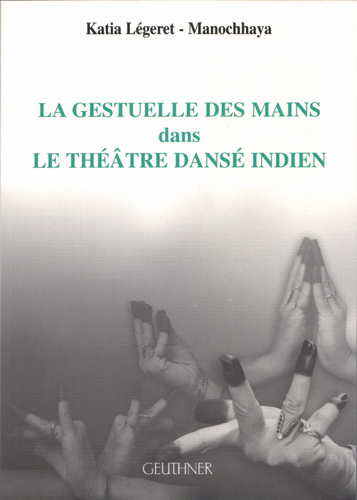
La gestuelle des mains dans le théâtre dansé indien
Auteur(s) : LÉGERET-MANOCHHAYA Katia
Parution : 2004
Ce livre est disponible
En savoir plus...
ISBN 10 : 270533758X
ISBN 13 : 9782705337582
Pages : 144
Format (mm) : 150x210
Avec 1700 langues maternelles dont 18 officielles, l'Inde est une civilisation où le multilinguisme est omniprésent. Elle a généré, dans le théâtre dansé, un langage artistique et symbolique des gestes des mains d'une richesse unique au monde : les mudra et hasta. Répertoriée il y a environ 2000 ans dans le Natyasastra et transmise oralement de génération en génération, cette gestuelle passe outre la barrière des langues.
Ancienne élève de l'Ecole Normale Supérieure en philosophie, docteur en science de l'art, Katia Légeret est habilitée à diriger des recherches en esthétique (Paris 1 Sorbonne) et est responsable du département de danse au CICEP (MSH Paris Nord). Elle poursuit son enseignement universitaire à Paris 8 tout en menant une carrière internationale de Bharata-natyam sous le nom de Manochhaya.
Voir toutes les monographies Geuthner
Mots-clés : arts, Inde, hindouisme, danse, corps, bharata-natyam, mudra
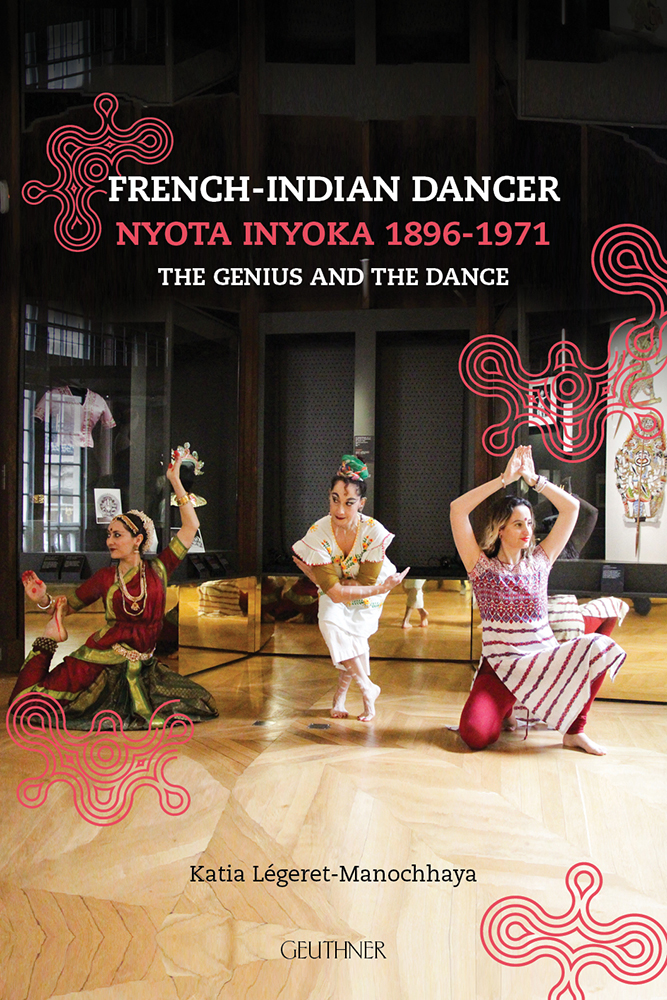
French-Indian dancer Nyota Inyoka 1896-1971
The Genius and the DanceAuteur(s) : LÉGERET-MANOCHHAYA Katia
Parution : 2023
Ce livre est disponible
En savoir plus...
ISBN 10 : 2705341053
ISBN 13 : 9782705341053
Pages : 140
Format (mm) : 160x240
Nyota Inyoka created around 50 compositions combining Theatre, Dance and Music relating to India, between 1921 and her final performances in the 1950s. From the very beginning of her international career, she performed in the most prestigious theatres of the time, mainly in France, in Europe and in America. Nyota Inyoka was a pioneer in many respects. She was the first Franco-Indian woman artist in Indian modern dance, but was no doubt overshadowed by the first modern Indian dancer Uday Shankar. Nyota Inyoka was the first feminist Indian dancer to draw inspiration from Hinduism, as her innovation came through the medium of figures of goddesses. Historians have largely ignored this pioneer, certainly due to the fact that she is unclassifiable. Her work was shut into the category of oriental dance, with its presumptions related to the history and imaginary of colonialism, which press coverage of her performances was eager to highlight. Yet Nyota Inyoka was extremely close to the India of her time. But the exceptional nature of Nyota Inyoka’s work goes even further. She was the first in France to interpretate on a western stage the difficult portion of the most ancient Sanskrit dance treatise, encompassing the 108 karaṇa, an alphabet of poses and steps, for which so many Indian dance styles offer an interpretation. She did this particularly at the time of the reinvention of temple dances of southern India starting in the 1930s.
Starting in 2018 at the Bibliothèque nationale de France, a symposium with a research-creation next to Inyoka’s archives, include an interpretation of Nyota Inyoka’ Dances by contemporary women artists and researchers, to reconsider the complex history of modern dance and classical Indian dance together.
Katia Légeret is a researcher and Professor of Philosophy and Performing Arts at University Paris 8, where she leads the research team Scènes du monde [world stages]. Director and choreographer, she is a Bharata Natyam artist under the name Manochhaya, and a specialist in Indian classical and contemporary forms of dance theatre.
Mots-clés : arts, dance, india, Nyota Inyoka, Music
L’abbaye Saint-Pé-de-Générès, l’histoire d’une présence au monde
XIe-XXIe siècleAuteur(s) : Collectif, HUREL Daniel-Odon (dir.)
Parution : 2025
Ce livre est disponible
En savoir plus...
ISBN 10 : 2705341367
ISBN 13 : 9782705341367
Format (mm) : 160x240
Monastère bénédictin, petit séminaire, institution d’enseignement puis projet maronite, voici les grandes lignes de l’histoire de l’abbaye Saint-Pé-de-Bigorre ou de Générès évoquées dans ce volume, fruit de la rencontre tenue à Saint-Pé à l’occasion du millénaire de l’abbaye en juillet 2022. À l’échelle de ce millénaire, il faut distinguer, bien entendu, des temporalités différentes : un peu moins de 800 ans pour la présence monastique et bénédictine, un peu moins d’un siècle pour le petit séminaire, une centaine d’années pour les institutions d’enseignement au xxe siècle et enfin moins d’une dizaine d’années de présence maronite porteuse d’avenir.
Chaque étape de cette histoire rend compte d’un contexte spécifique : celui du monachisme médiéval puis moderne d’inspiration bénédictine avec ses transformations, ses crises et ses relectures périodiques de la Règle, la plus importante étant celle de Saint-Maur au xviie siècle ; celui de la reconstruction du catholicisme dans la France du xixe siècle ; celui de ce long xxe siècle dont les bouleversements politiques, sociaux et religieux n’ont pas été sans conséquence sur l’institution d’enseignement de Saint-Pé, tant sur le plan de la sociologie religieuse, des méthodes et de l’histoire de l’enseignement et de l’éducation que des conséquences du concile Vatican ii ; enfin celui de l’église maronite en France.
Point commun à cette temporalité à dimension variable : un cadre de vie et des hommes, individus et communautés, lieux de prière, lieu de transmission d’un savoir religieux, spirituel, liturgique, théologique, un territoire, une mémoire construite et parfois sans doute idéalisée.
Première synthèse d’ensemble sur l’abbaye et le site de Saint-Pé, cet ouvrage constitue une sorte de point d’étape ou de prélude à une histoire en profondeur de chacune de ces histoires particulières.
Voir tous les collectifs Geuthner
Mots-clés : Histoire-Géographie, religion, histoire, maronite, monastère, abbaye, bénédictin, séminaire
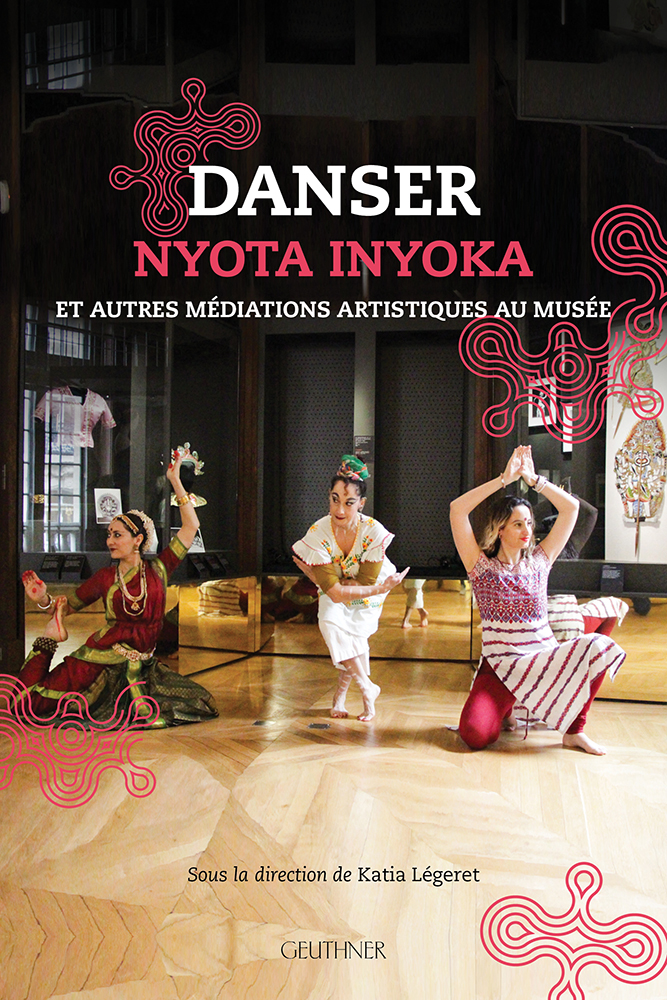
Danser Nyota Inyoka
Et autres médiations artistiques au muséeAuteur(s) : Collectif, LÉGERET Katia
Parution : 2021
Ce livre est disponible
En savoir plus...
ISBN 10 : 2705340841
ISBN 13 : 9782705340841
Format (mm) : 160x240
Cet ouvrage propose des modes sensibles d’être-ensemble au musée, entre les visiteurs, les œuvres et les objets exposés, pour transmettre par des gestes, les archives en lien avec des patrimoines immatériels. L’attention au corps devient essentielle, elle vise à la fois le bien-être des visiteurs et leur créativité. Le répertoire exceptionnel de danses sur l’Inde de Nyota Inyoka, chorégraphe franco-indienne (1896-1971) exposée à la BnF en 2019, est mise à l’honneur dans cette recherche, par des femmes artistes et chercheuses contemporaines, démontrant qu’elle a été une pionnière de danses classiques et modernes de l’Inde, oubliée de l’Histoire. En lien systémique avec des performances artistiques, les chercheurs internationaux des disciplines invitées (arts du spectacle vivant, arts numériques, anthropologie, ethnologie, géographie, histoire de l’art, philosophie, sciences du langage – LSF, philosophie, sociologie), proposent de réfléchir ensemble aux enjeux actuels de ces pratiques créatives de médiation transculturelle au musée.
Mots-clés : arts, Inde, art, danse, corps, performance, musée, Nyota Inyoka, médiation
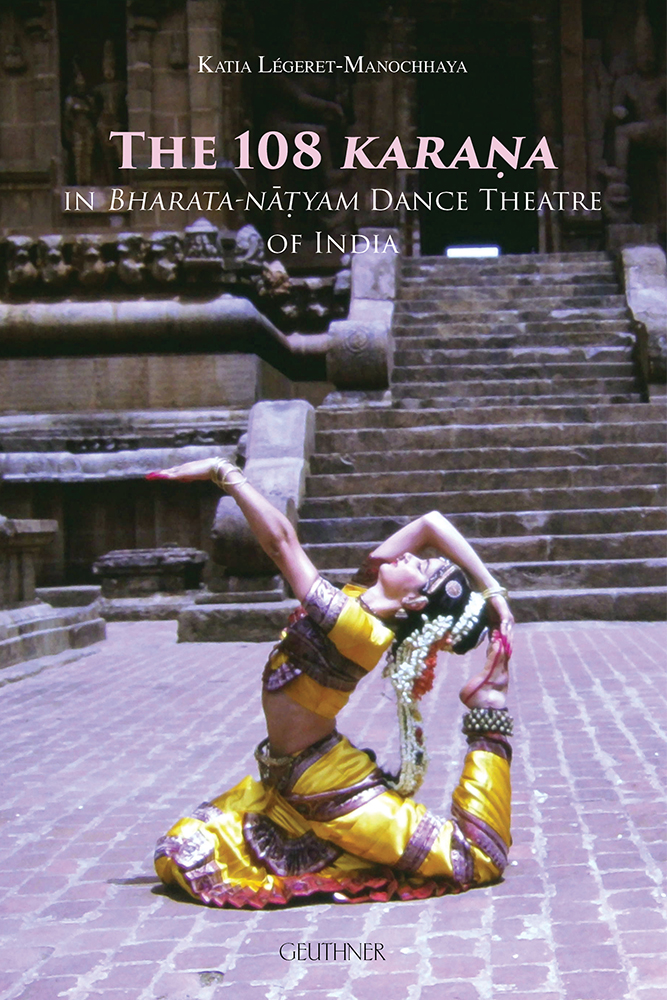
The 108 karaṇa
in Bharata-natyam Dance Theatre of IndiaAuteur(s) : LÉGERET Katia
Parution : 2022
Ce livre est disponible
En savoir plus...
ISBN 10 : 2705340988
ISBN 13 : 9782705340988
Format (mm) : 160x240
The 108 karaṇa make up the oldest Indian alphabet of movements to dance, theatre, sculpture and music codified in the Nāṭyaśāstra. Their oral transmission is extremely rare, and the author of the present publication nourished her theoretical research with the instruction in Bharata-nam that she received firstly in Paris from Amala Devi, in Chennai from Swarnamukhi, State Dancer of Tamil Nadu, and subsequently, over a period of thirty years, from Natyacharya K. Muralidhar Rao, in Mysore (Karnataka). Interpretations of karaṇa poses and steps from the Nāṭyaśāstra are countless and creative, and they inspire contemporary artists.
In 2022 the author made a film on the teaching of Natyacharya K. Muralidhar Rao, which is freely accessible to readers of this book: Bharatanatyam Dance Theatre: DANCING OF THE HEART, with support from Labex Arts-H2H/EUR ArTec (Paris 8 and UPL University).
Katia Légeret is a researcher and Professor of Philosophy and Performing Arts Aesthetics at University Paris 8, where she leads the research team Scènes du monde [world stages]. Director and choreographer, she is a bharata-nāṭyam artist under the name Manochhaya, and a specialist in traditional and contemporary Indian forms of dance theatre. She is the author, in particular, of Danse Contemporaine Indienne et Théâtre Indien: Un Nouvel Art? (PUV, 2010) and Dance Theatre of India, Crossing New Aesthetics and Cultures (Niyogi Books, 2018), and has edited collective works including Rodin and the Dance of Shiva (Niyogi Books, 2016), Créons au Musée (Geuthner, 2019) and French-Indian dancer Nyota-Inyoka (1896-1971) The Genius and the Dance (Geuthner, 2022). The latter relates to an international research project (Labex Arts-H2H and EUR ArTeC) involving partnerships in Paris with RMN-Grand Palais, the Musée National des Arts Asiatiques-Guimet and the Bibliothèque nationale de France.
Mots-clés : arts, Inde, dance, india, karana



 Denfert-Rochereau ou Raspail
